Artificial Intelligence and Machine Learning are undergoing an unprecedented phase of acceleration, driven by breakthroughs in large language models, multimodal learning, generative AI, and agent-based systems. These technologies are rapidly transforming not only computer science, but also domains such as medicine, engineering, natural sciences, and the social sciences. As a consequence, there is a growing demand from both academia and industry for advanced, practice-oriented education that goes beyond fundamentals and focuses on cutting-edge methods, scalable infrastructures, and real-world deployment.
The AICET 2026 – AI Cutting-Edge Trends Summer Symposium and School aims to address this need by providing a high-level, international forum that combines scientific excellence with hands-on training. Through a carefully designed program that integrates plenary keynotes, NVIDIA-led full-day workshops, peer-reviewed lectures, tutorials, and short courses, the event will equip participants with both conceptual understanding and practical skills in emerging AI/ML technologies. By fostering interaction between students, PhD candidates, researchers, and industry professionals, AICET 2026 seeks to create a vibrant ecosystem for knowledge exchange, collaboration, and innovation at the forefront of AI research and applications.

The following events are preliminary and currently under development;
information may change.
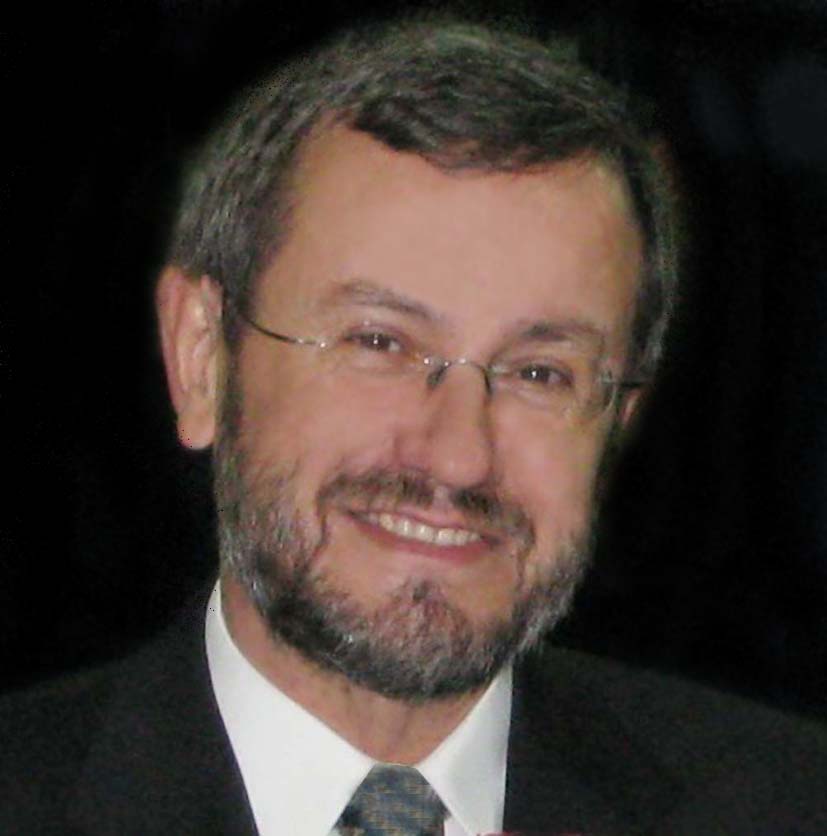
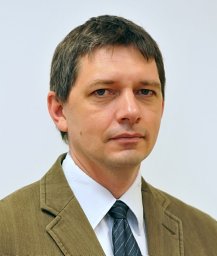
(Person #1)
Multi-Agent Systems and Agentic AI (Part 1)
Soft Skills Workshop
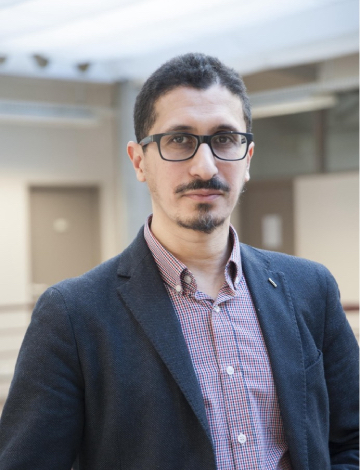
(Person #2)
Multi-Agent Systems and Agentic AI (Part 2)
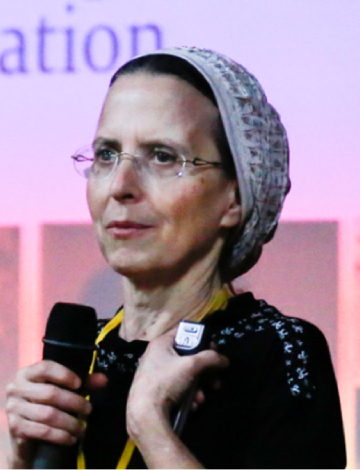
(Person #3)
Building AI Agents with Multimodal Models (Part 1)
Soft Skills Workshop
(Person #4)
Building AI Agents with Multimodal Models (Part 2)
(Person #5)
Generative AI with Diffusion Models (Part 1)
Soft Skills Workshop
(Person #6)
Generative AI with Diffusion Models (Part 2)
(Person #7)
(Person #8)
(Person #9)
(Person #10)
AICET 2026 offers a unique opportunity to gain first-hand exposure to the latest advances in Artificial Intelligence and Machine Learning while actively engaging with an international community of researchers, students, and industry professionals. Participants will benefit from:
AICET 2026 offers access to the latest developments in artificial intelligence through plenary and invited talks delivered by leading academic and industry experts.
Participants can take part in full-day practical NVIDIA workshops covering highly relevant topics such as anomaly detection, multimodal AI agents, and generative AI with diffusion models.
The program brings together academic excellence, industry-oriented skills development, and the possibility of earning internationally recognized certifications.
By joining the full program of IEEE CITDS on Days 4–5, participants can connect with researchers, professionals, and innovators from academia and industry in an international setting.
AICET participants will have the opportunity to join competitive innovation programs, including the Idea Hackathon / AI Demo Challenge with cash prizes, as well as Medical AI-focused challenge activities that allow them to test their skills in real application-driven scenarios.
By joining AICET 2026, participants will not only learn about cutting-edge AI trends, but also develop practical competencies and build connections that support their future research and professional careers.
(Draft)
Additional notes:
Chair: Prof. András Hajdu, hajdu.andras@inf.unideb.hu, University of Debrecen.
Short CV: András Hajdu received his MSc degree in Mathematics from Lajos Kossuth University, Debrecen, Hungary, in 1996, and his PhD in Mathematics and Computer Science from the University of Debrecen in 2003. He was a postdoctoral researcher at Aristotle University of Thessaloniki, Greece, between 2005 and 2006. Since 2017, he has been a Full Professor at the University of Debrecen, where he has served as Head of the Department of Data Science and Visualization since 2011 and Dean of the Faculty of Informatics since 2019. He also leads the Data Science and Visualization doctoral program and has been Director of the György Hajós Data Science Special College since 2021. Between 2020 and 2024, he worked as Senior Data Analyst at the National Data Assets Agency of Hungary. He is an NVIDIA Ambassador and is actively involved in higher education, professional training, and research leadership in data science, artificial intelligence, and related fields.
His scientific and educational work has been recognized by several prestigious awards, including the Professor of the István Tisza Foundation award, the Tamás Rapcsák Prize, the Best Publication Award of the University of Debrecen, the János Szentágothai Fellowship, the national IT Lecturer of the Year award, the Faculty of Informatics Award, the János Bolyai Research Scholarship, and the Gyula Farkas Prize. He has also held important professional roles in national and international scientific communities, including President of the Hungarian Association for Image Analysis and Pattern Recognition, Board Member of the International Association of Pattern Recognition, and IEEE Senior Member.
He has extensive experience in leading and contributing to national and international research and innovation projects in machine learning, medical image analysis, cloud computing, autonomous vehicles, and sensor optimization. His recent projects include FRATERNITY, OTKA NK143540, DIGITAL-2021-EDIH-01, OCRE, and GINOP_PLUSZ-2.1.1, while earlier major projects include SCOPIA, MobileAssistant, DRSCREEN, and the FP6 SHARE project, where he served as scientific manager. He is also active as an editor, reviewer, and conference organizer in the fields of data science, image processing, and artificial intelligence.
His research interests include data science, artificial intelligence, machine learning, deep learning, digital image processing, medical image analysis, optimization, big data, and discrete mathematics. He has authored and co-authored more than 170 journal and conference papers, and have received more than 4,500 citations; his h-index is 34.
Technical Program Chair: Balázs Harangi, harangi.balazs@inf.unideb.hu, University of Debrecen.
Short CV: Balazs Harangi, Ph.d received his MSc degrees in Program Engineering and Mathematics from University of Debrecen, Faculty of Informatics, in 2010. From 2010 to 2013 he was a PhD student at Faculty of Informatics and he obtained his PhD degree in Informatics (Medical Image Processing) from the University of Debrecen, Hungary, in 2015, University of Debrecen. Since 2013 he has been serving as Assistant Lecturer, later as Assistant Professor and as Associate Professor at Department of Data Science and Visualization, Faculty of Informatics, University of Debrecen.
As a lecturer at the University of Debrecen, he gives lectures and seminars for several courses in the fields of artificial intelligence and machine learning for BS.c, MS.c and Ph.D students. He has been and is currently the thesis supervisor of several students and is continuously involved in postgraduate education as a lecturer at the Doctoral School of Computer Science, University of Debrecen. He is also the subject supervisor of 7 active doctoral students. He is involved in several mentoring programs, where he acts as a mentor for young and talented students. In addition to teaching traditional university courses, he is also involved in the delivery of NVIDIA and Microsoft industry certification exam preparation courses.
He is a member of the IEEE, the John von Neumann Computer Society (Hungary) and member the Hungarian Association for Image Analysis and Pattern Recognition. He has authored or co-authored 72 publications cited more than 1500 times; his H-index is 16. His primary research fields are the digital/medical image processing, pattern recognition, machine learning/deep learning.
Technical Coordinator: Sandor Pecsora, pecsora.sandor@inf.unideb.hu, University of Debrecen
Event Coordinator: Bence Hegedűs, hegedus.bence@inf.unideb.hu, University of Debrecen
Administrative Coordinator: Arnold Pintér, pinter.arnold@inf.unideb.hu, University of Debrecen
For the successful completion of the symposium, the participants should:
By registering in AIDA AICET2026, you consent for the storage and processing, for the purposes of AICET2026 registration, attendance and delivery of AICET2026 certificates and any other event-related procedures, of any personal data you will provide to AIDA AICET2026 (including proof of student status).
You have the right to revoke your consent at any time by sending an e-mail to ------- <abc@unideb.hu>. The withdrawal of your consent does not affect the lawfulness of the processing of personal data that was based on this consent and took place beforehand.